 Image 1 of 4
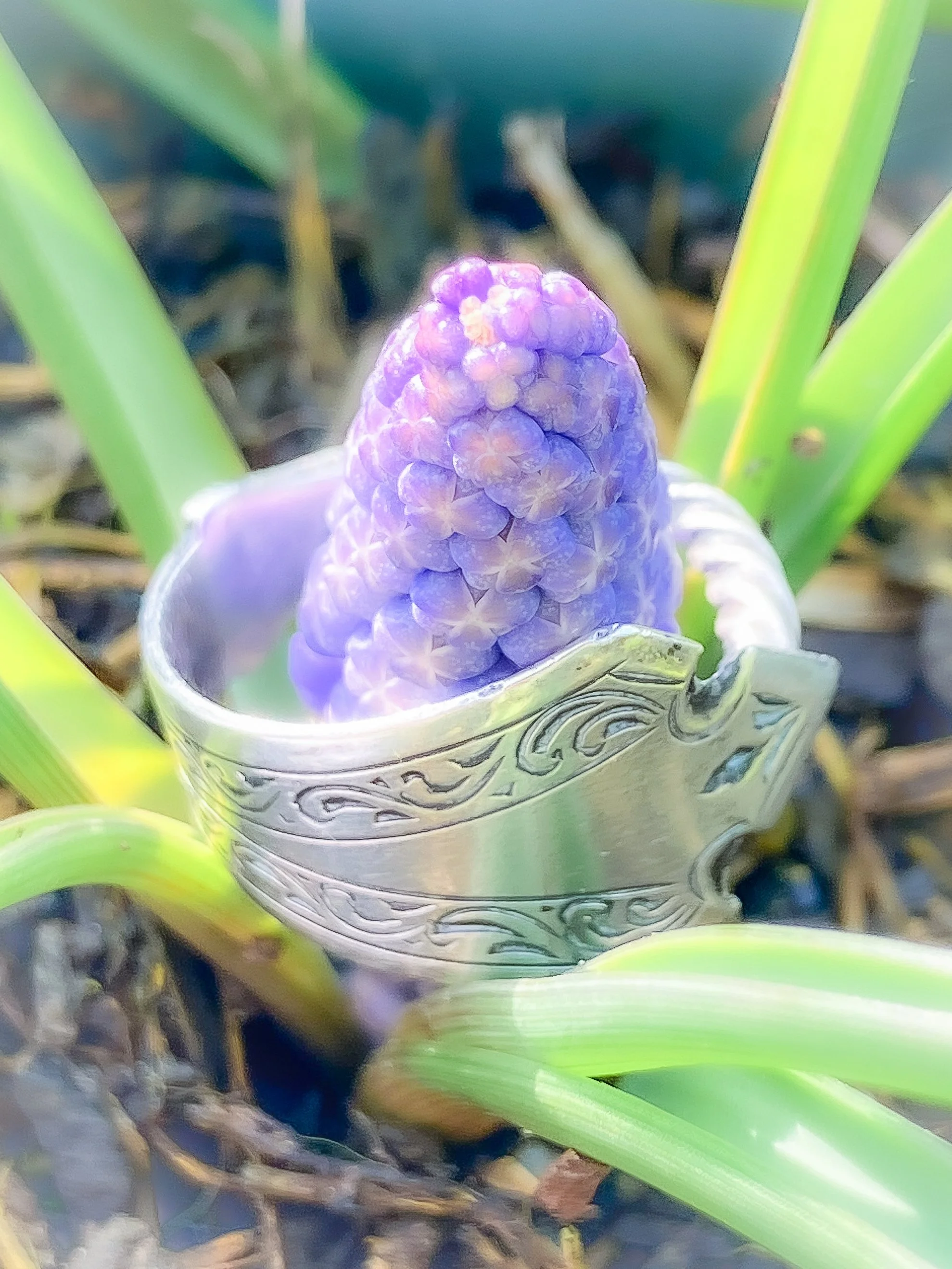 Image 2 of 4
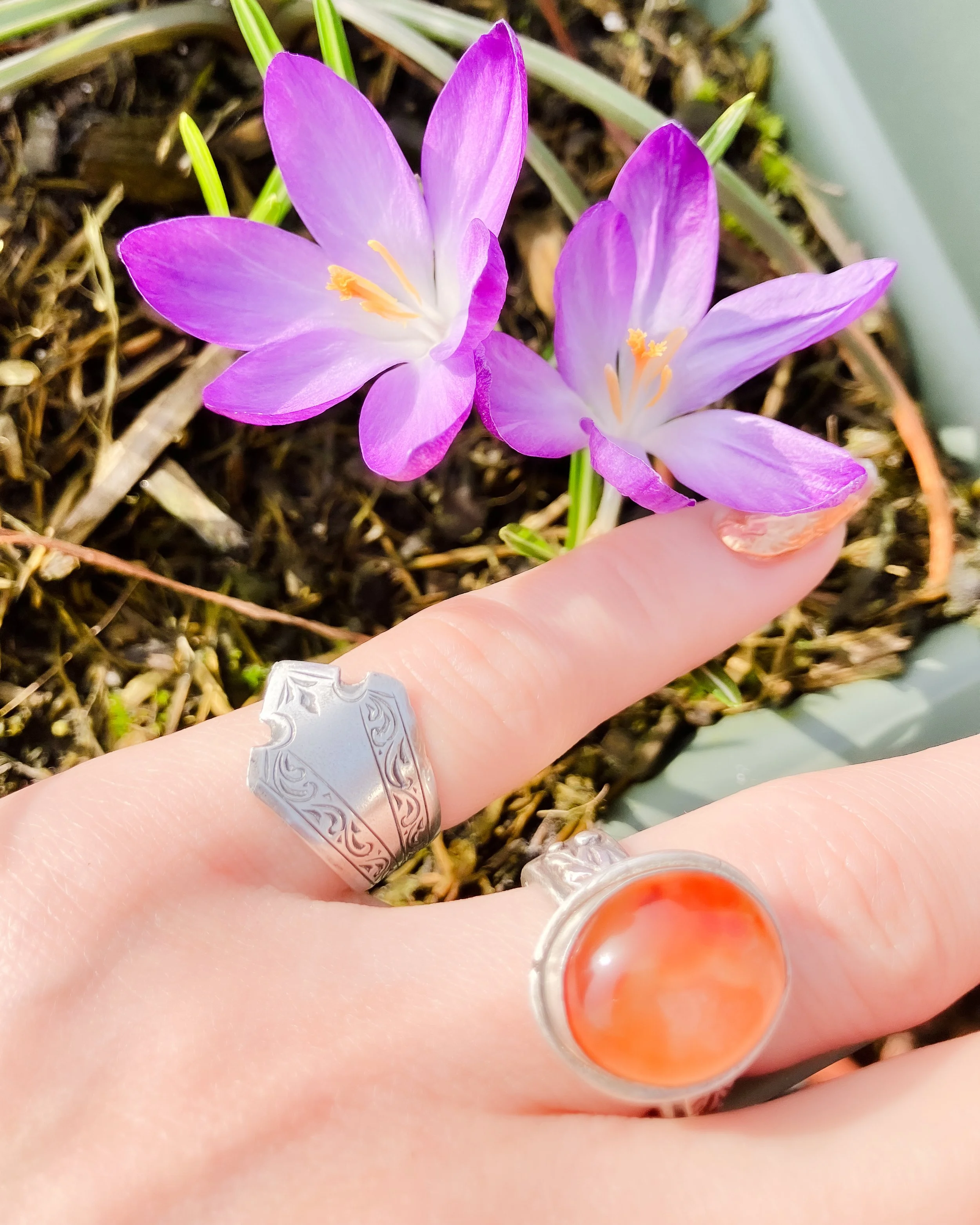 Image 3 of 4
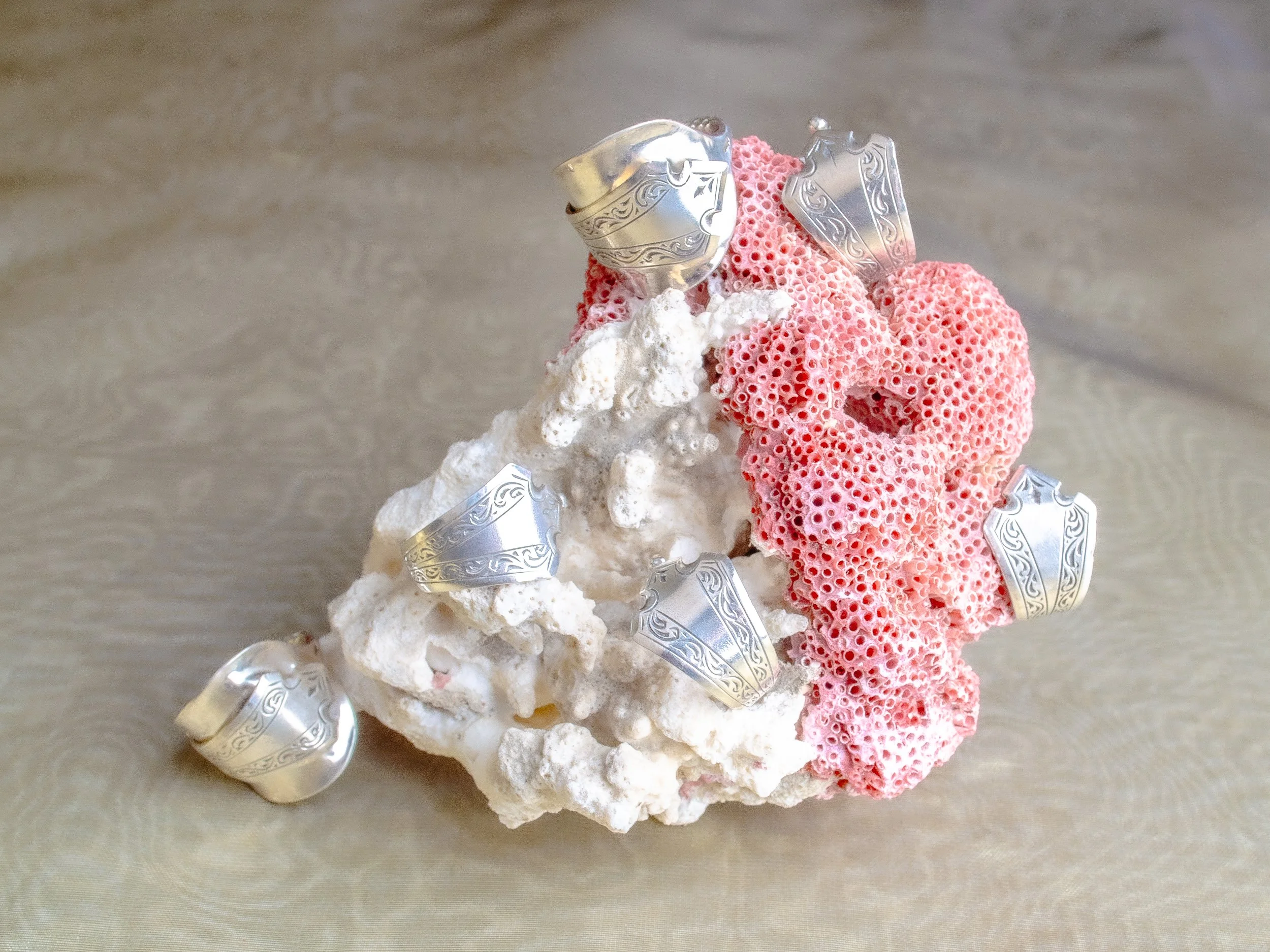 Image 4 of 4
- Nederlands onderaan -
This ring was made in the silver city.
Schoonhoven, in the heart of the Netherlands, has been home to silversmiths for centuries. The spoon that became this ring was made there by the Pluut family, a silversmithing family whose maker's mark, FP1, was officially registered at the Dutch assay office. The hallmarks on the silver confirm what it is: Dutch 925 sterling silver, 92.5% pure, made and certified in Schoonhoven circa 1906-1953.
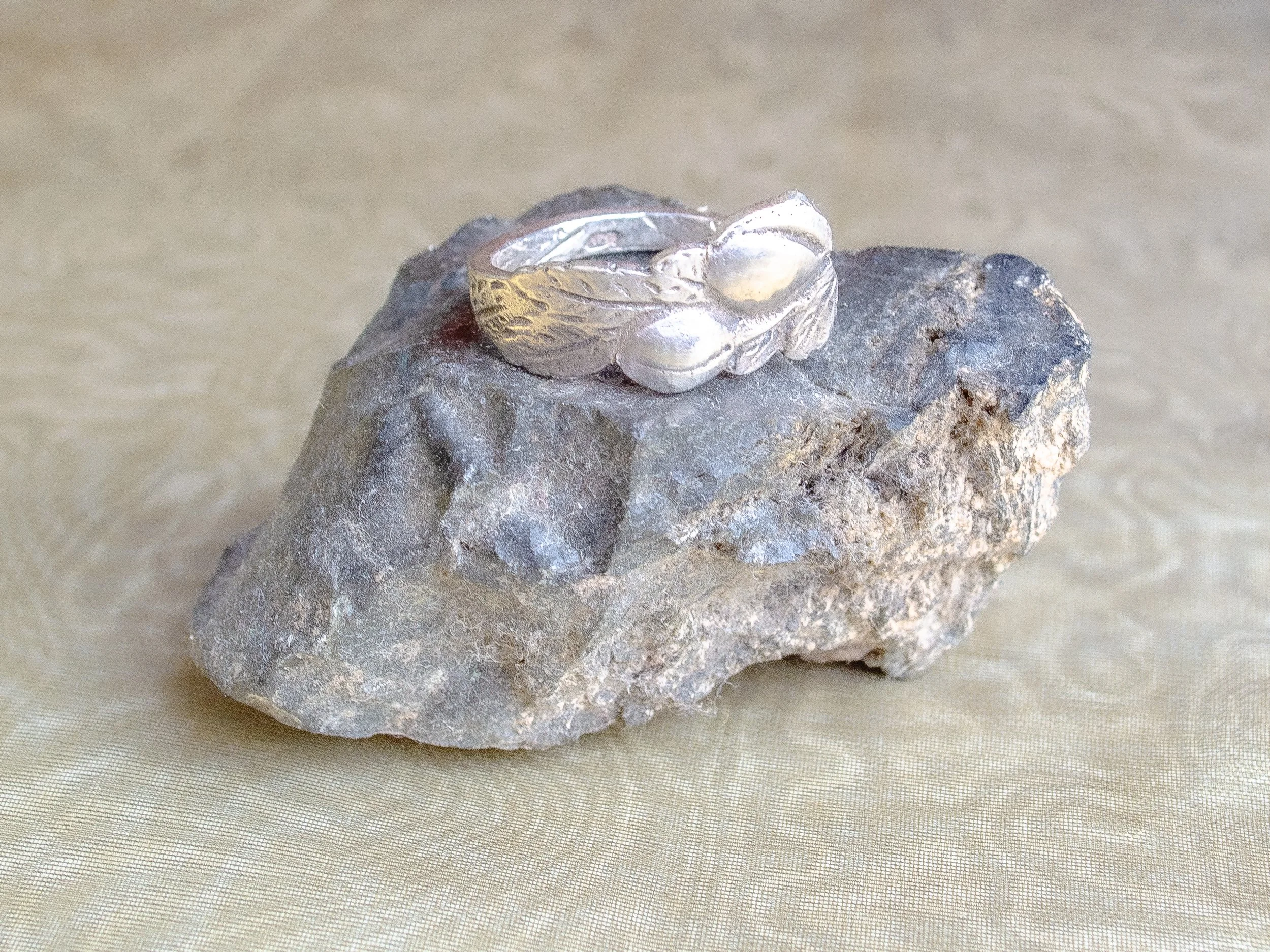
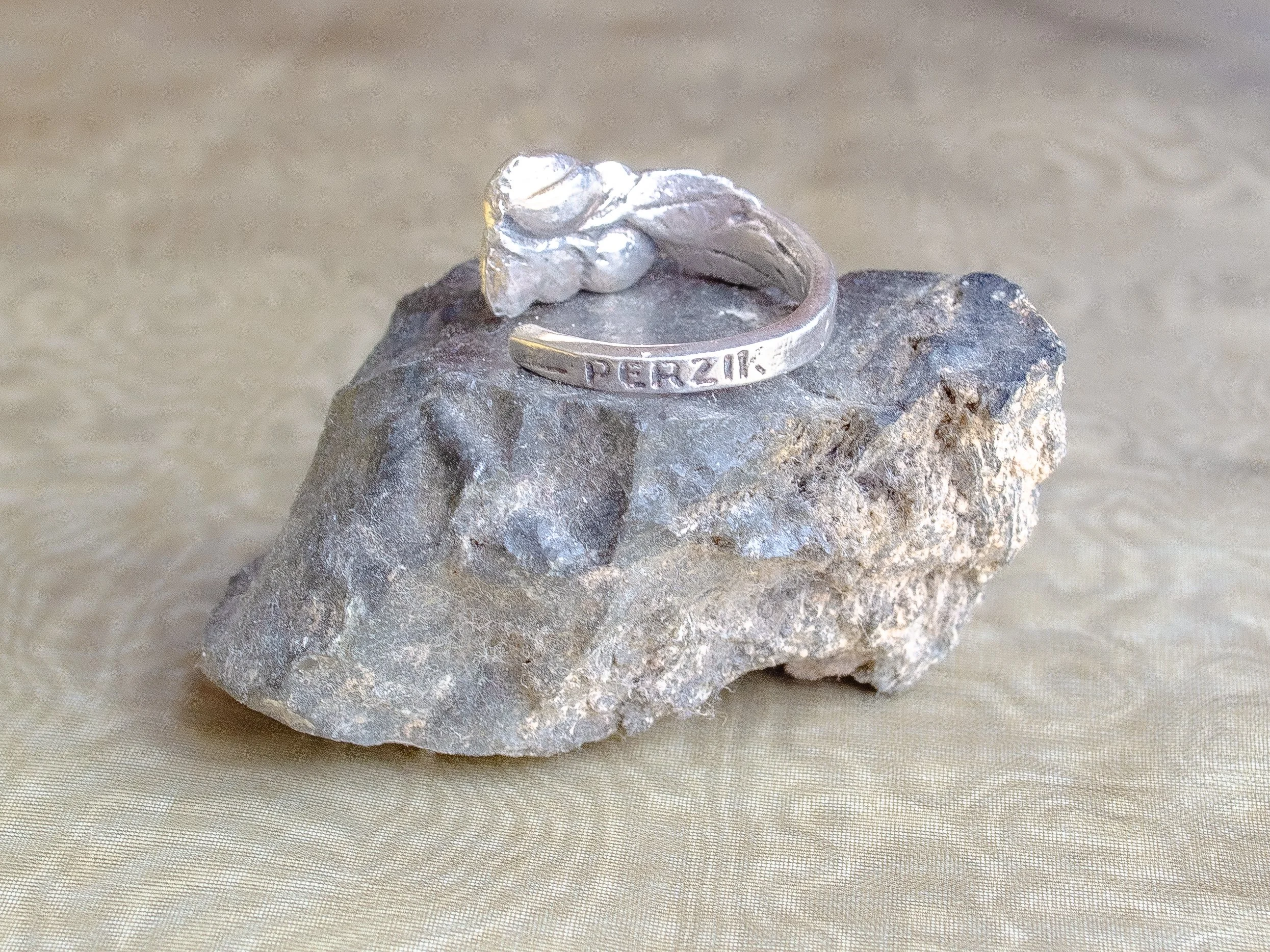
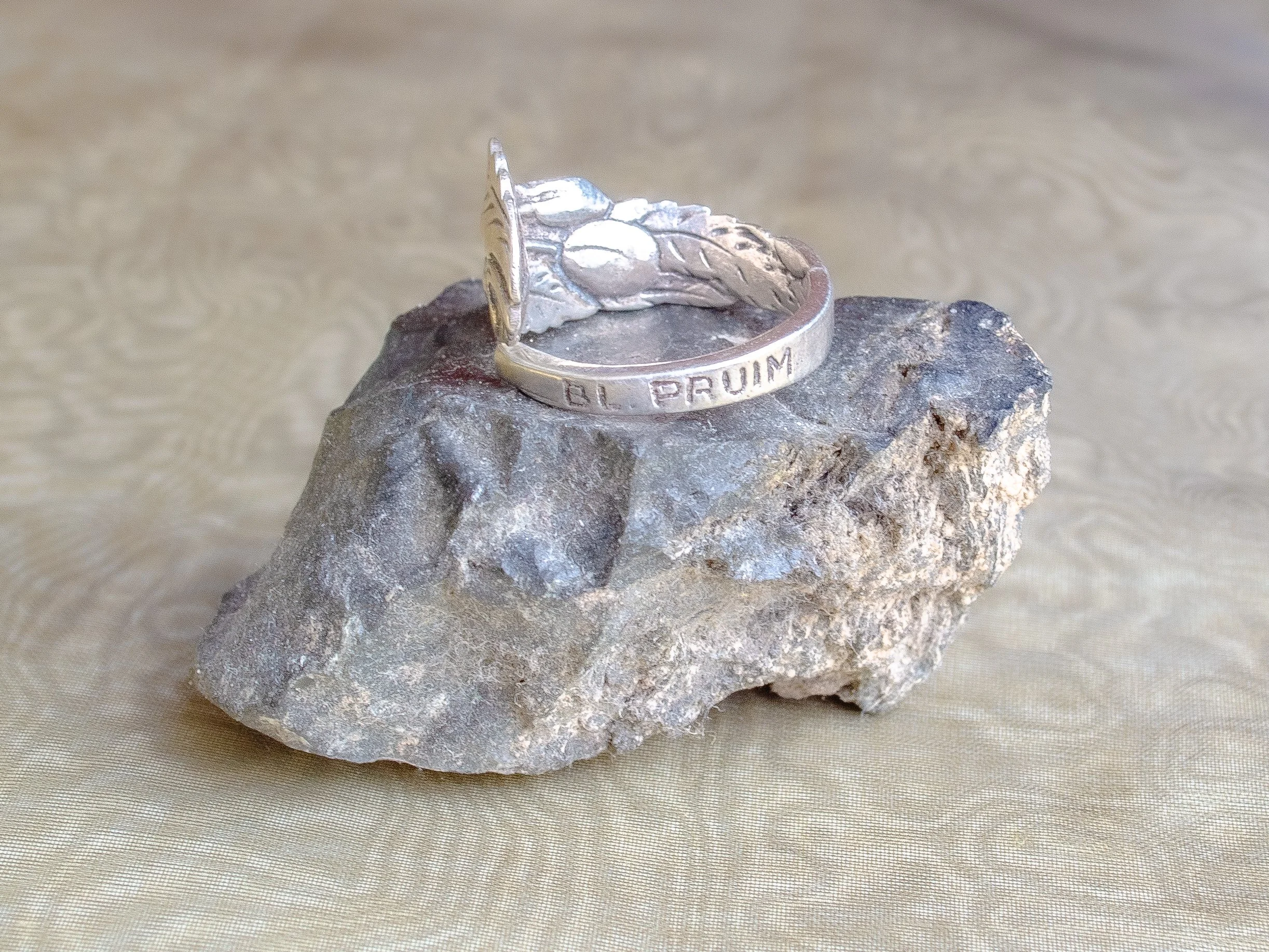
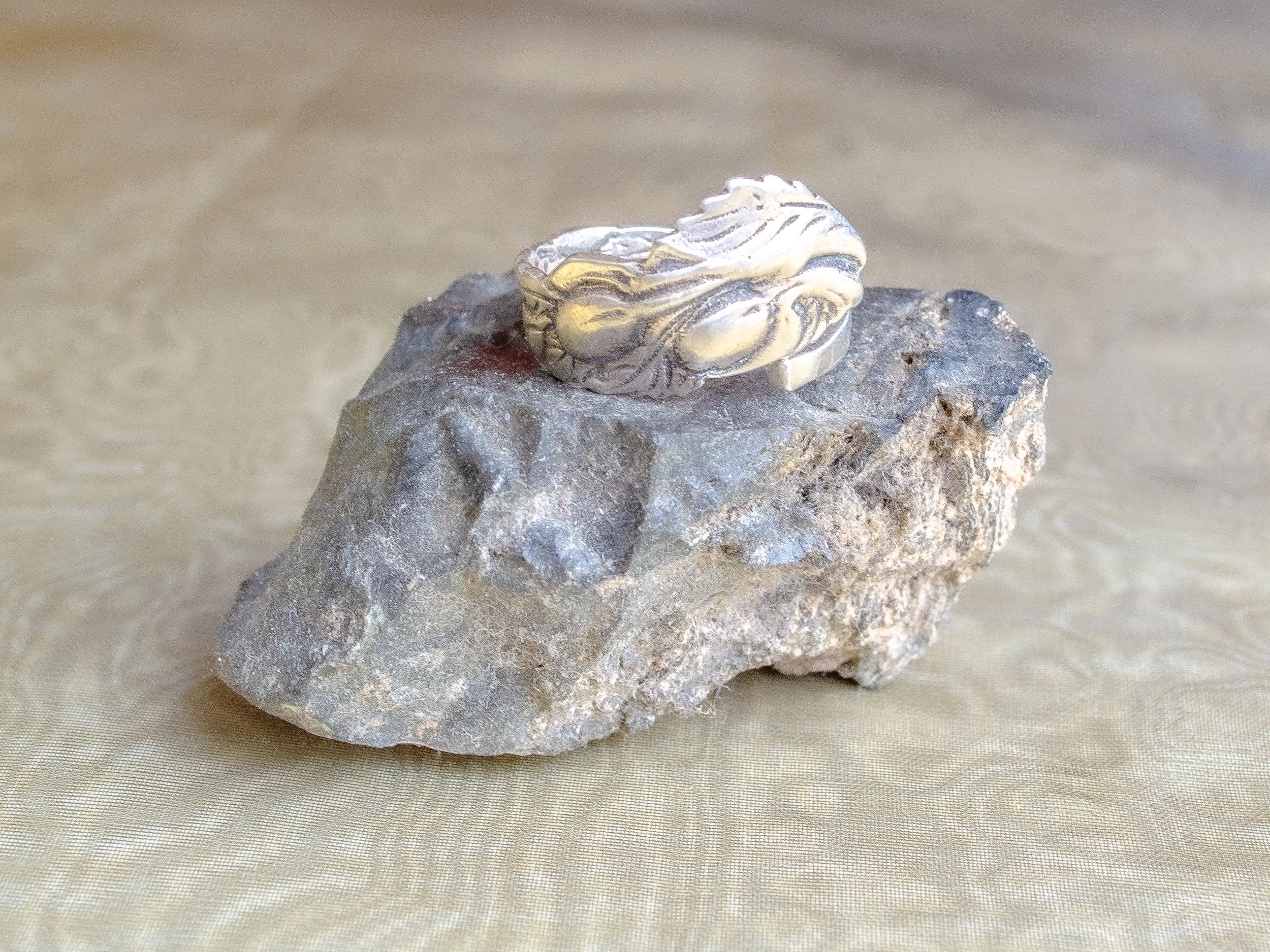
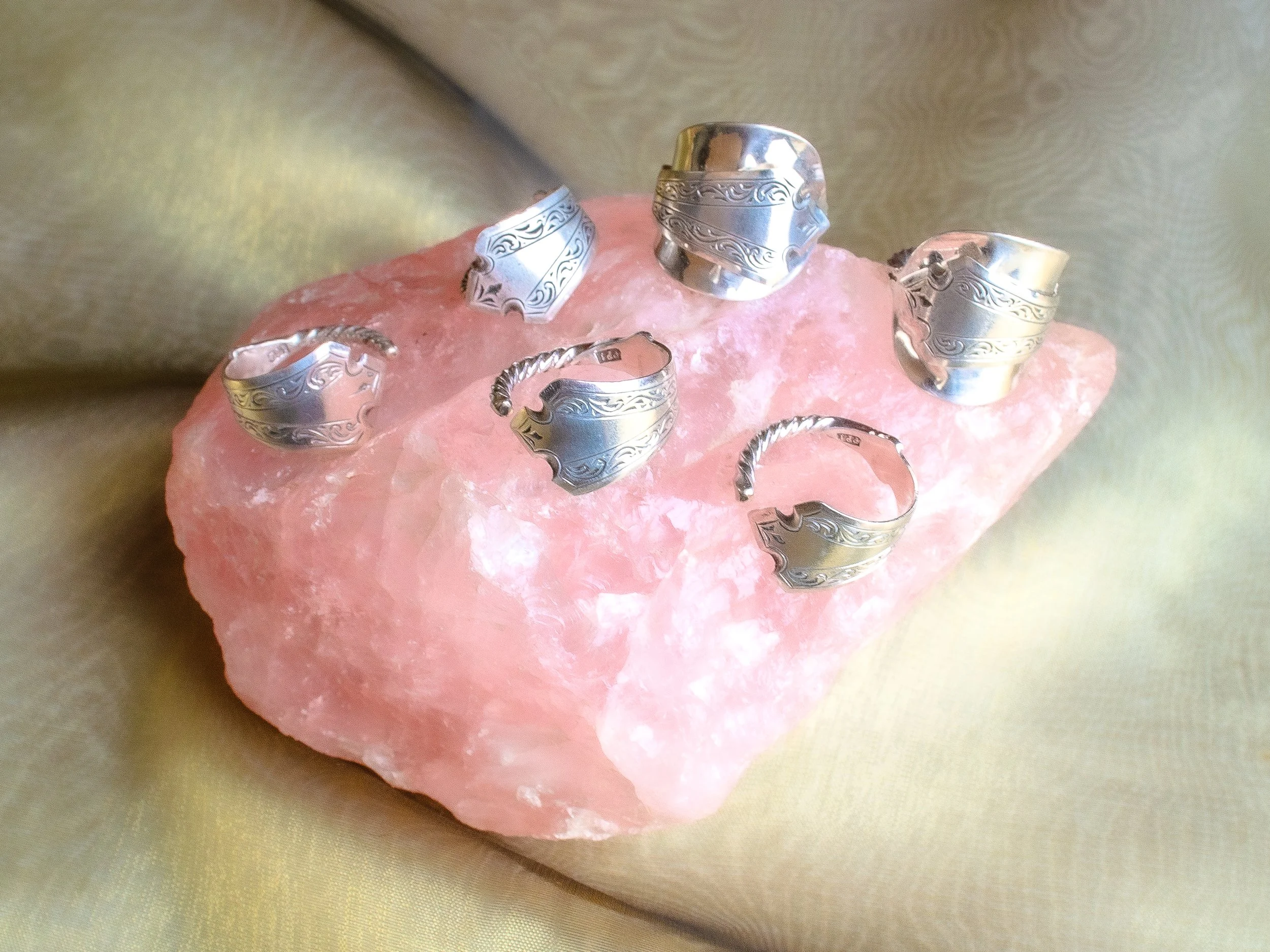
The face of this ring is the shoulder of the spoon handle, shaped into a shield cartouche with fine scrolling engraving running along the border. That detail was not added. It was always there.
I sawed off the bowl of the spoon, polished the silver, then bent the handle by hand into a ring band. The crest became the face. The engraving, original and untouched, frames it.
Two of the rings in this series were made from the full spoon. The bowl of the spoon remains, creating a smooth, domed interior that sits differently on the finger: rounder, more substantial, more present. The other four were made from the handle only, resulting in a lighter, flatter band that carries the same crest face.
Both styles carry the original Dutch hallmarks on the inside of the band.
Limited to 6. When a size is gone, it is gone.
Details Material: Dutch sterling silver (925, 92.5% pure) - Hallmark: Dutch sword mark + maker's mark FP1 (Pluut, Schoonhoven) - Origin: Schoonhoven, the Netherlands, circa 1906-1953 - Handmade in: the Netherlands - Availability: 6 total
Deze ring is gemaakt in de zilverstad.
Schoonhoven, in het hart van Nederland, herbergt al eeuwen zilversmeden. Het lepeltje dat deze ring werd, is daar gemaakt door de familie Pluut, een familie van zilversmeden wiens meesterteken FP1 officieel is geregistreerd bij het Nederlandse waarborgkantoor. De keurtekens op het zilver bevestigen wat het is: Nederlands 925 sterling zilver, 92,5% puur, gemaakt en gecertificeerd in Schoonhoven circa 1906-1953.
Het gezicht van deze ring is de schouder van het lepelhandvat, gevormd als een schildcartouche met fijn golvend gravuurwerk langs de rand. Dat detail is er niet aan toegevoegd. Het was er altijd al.
Ik zaagde de kom van het lepeltje eraf, polijstte het zilver, en boog daarna het handvat met de hand in Nederland om tot een ringband. Het wapenschild werd het gezicht. Het gravuurwerk, origineel en onaangetast, omlijst het.
Twee van de ringen in deze serie zijn gemaakt van het volledige lepeltje. De kom blijft zitten, waardoor een gladde, gewelfde binnenkant ontstaat die anders op de vinger zit: ronder, substantiëler, aanweziger. De andere vier zijn gemaakt van alleen het handvat, wat resulteert in een lichtere, plattere band met hetzelfde gezicht.
Beide stijlen dragen de originele Nederlandse keurtekens aan de binnenkant van de band.
Gelimiteerd tot 6. Als een maat weg is, is hij weg.
Details Materiaal: Nederlands sterling zilver (925, 92,5% puur) - Keurteken: Nederlands zwaardje + meesterteken FP1 (Pluut, Schoonhoven) - Herkomst: Schoonhoven, Nederland, circa 1906-1953- Handgemaakt in: Nederland - Beschikbaarheid: 6 totaal
- Nederlands onderaan -
This ring was made in the silver city.
Schoonhoven, in the heart of the Netherlands, has been home to silversmiths for centuries. The spoon that became this ring was made there by the Pluut family, a silversmithing family whose maker's mark, FP1, was officially registered at the Dutch assay office. The hallmarks on the silver confirm what it is: Dutch 925 sterling silver, 92.5% pure, made and certified in Schoonhoven circa 1906-1953.
The face of this ring is the shoulder of the spoon handle, shaped into a shield cartouche with fine scrolling engraving running along the border. That detail was not added. It was always there.
I sawed off the bowl of the spoon, polished the silver, then bent the handle by hand into a ring band. The crest became the face. The engraving, original and untouched, frames it.
Two of the rings in this series were made from the full spoon. The bowl of the spoon remains, creating a smooth, domed interior that sits differently on the finger: rounder, more substantial, more present. The other four were made from the handle only, resulting in a lighter, flatter band that carries the same crest face.
Both styles carry the original Dutch hallmarks on the inside of the band.
Limited to 6. When a size is gone, it is gone.
Details Material: Dutch sterling silver (925, 92.5% pure) - Hallmark: Dutch sword mark + maker's mark FP1 (Pluut, Schoonhoven) - Origin: Schoonhoven, the Netherlands, circa 1906-1953 - Handmade in: the Netherlands - Availability: 6 total
Deze ring is gemaakt in de zilverstad.
Schoonhoven, in het hart van Nederland, herbergt al eeuwen zilversmeden. Het lepeltje dat deze ring werd, is daar gemaakt door de familie Pluut, een familie van zilversmeden wiens meesterteken FP1 officieel is geregistreerd bij het Nederlandse waarborgkantoor. De keurtekens op het zilver bevestigen wat het is: Nederlands 925 sterling zilver, 92,5% puur, gemaakt en gecertificeerd in Schoonhoven circa 1906-1953.
Het gezicht van deze ring is de schouder van het lepelhandvat, gevormd als een schildcartouche met fijn golvend gravuurwerk langs de rand. Dat detail is er niet aan toegevoegd. Het was er altijd al.
Ik zaagde de kom van het lepeltje eraf, polijstte het zilver, en boog daarna het handvat met de hand in Nederland om tot een ringband. Het wapenschild werd het gezicht. Het gravuurwerk, origineel en onaangetast, omlijst het.
Twee van de ringen in deze serie zijn gemaakt van het volledige lepeltje. De kom blijft zitten, waardoor een gladde, gewelfde binnenkant ontstaat die anders op de vinger zit: ronder, substantiëler, aanweziger. De andere vier zijn gemaakt van alleen het handvat, wat resulteert in een lichtere, plattere band met hetzelfde gezicht.
Beide stijlen dragen de originele Nederlandse keurtekens aan de binnenkant van de band.
Gelimiteerd tot 6. Als een maat weg is, is hij weg.
Details Materiaal: Nederlands sterling zilver (925, 92,5% puur) - Keurteken: Nederlands zwaardje + meesterteken FP1 (Pluut, Schoonhoven) - Herkomst: Schoonhoven, Nederland, circa 1906-1953- Handgemaakt in: Nederland - Beschikbaarheid: 6 totaal