Frequently Asked Questions
-
Yes, it’s real silver! All the jewellery made from silver clay and silver paste is fine silver. This means that it’s 99.9% silver. 925 sterling silver means that the piece is 92.5% silver. In the Netherlands there is no specific hallmark for fine silver so it gets the 925 sterling silver hallmark (everything above 92.5%). The eyelets I use are fine silver as well. The earring hooks I use are 925 sterling silver. If the silver content is below 92.5% I have mentioned it on the product page and therefore it will have another hallmark. For instance, very vintage silver could be 80% silver (mentioned as 800) but this is not common anymore in modern times.
All of the silver clay and silver paste pieces are even more pure and valuable than standard sterling silver.
-
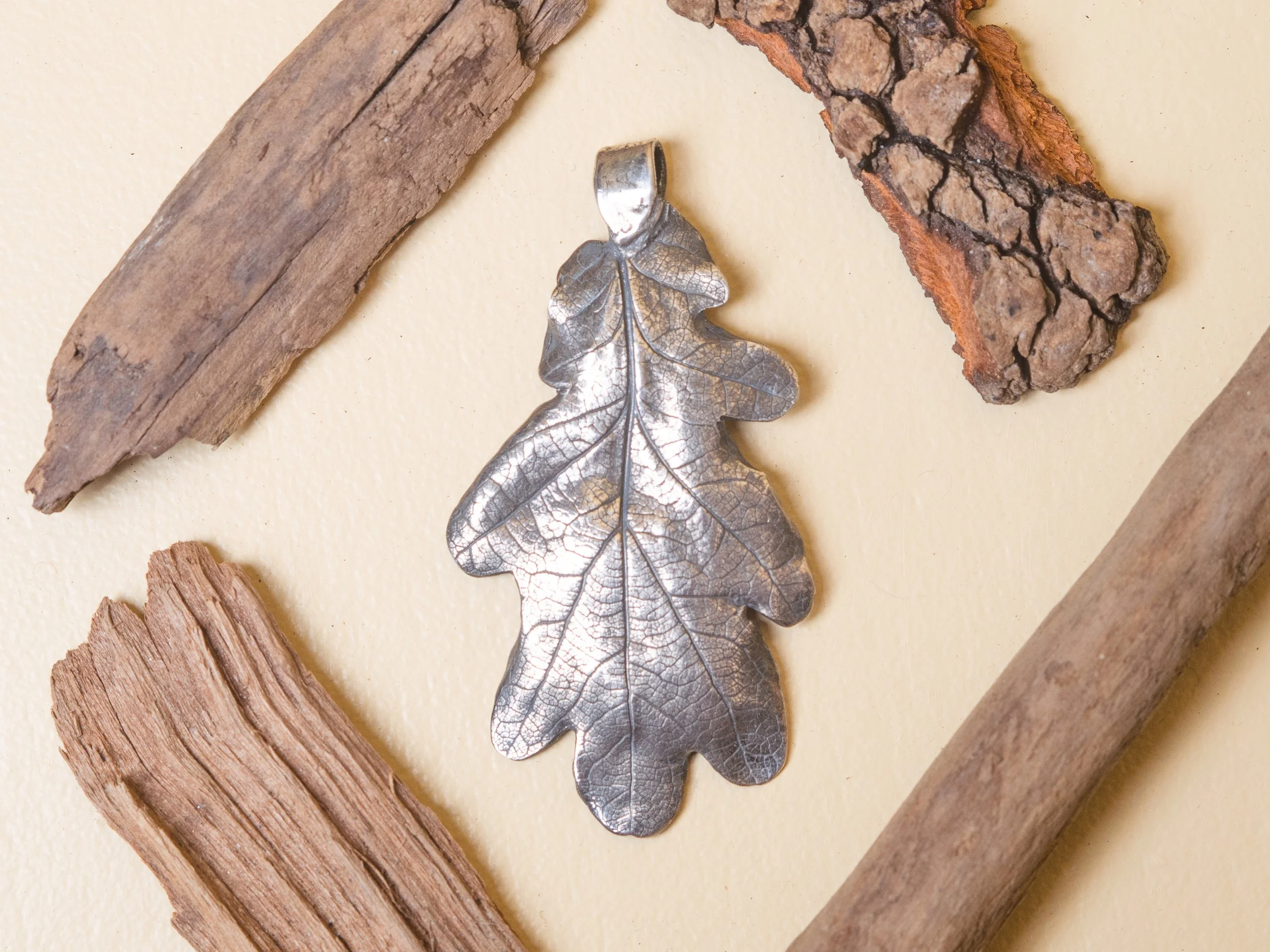
It depends! I will explain a few techniques. Silver paste is used for the leaves. I use a painting brush and I paint the paste on the leaf. This dries for 24 hours. Then I will add another layer. This process repeats itself a few more times, depending on the thickness I desire. Silver clay is a clay which is moldable. I made my own silicone molds and these I use to create for instance, the angel collection and the sea shell collection. After these steps I sand down the pieces and I fire them for 20 minutes. Then, I sand them and I polish them. Finally I use sulphur to oxidize the pieces. This is purely an aesthetic choice. Then I will polish the pieces again and they’re done! On my instagram I share more of the process in video, so get over there if you’d like to have a look.
-
Yes! Silver clay and paste is made in Japan from recycled silver. The silver is sourced from for instance electrical devices. This is made into a clay so all the silver can be reused.
-
Yes, they do. The last step in the process of making my silver jewellery is sending them to the Assay Office in the Netherlands. It is appointed by the Dutch Ministry of Economic Affairs and Climate Policy.
There they will test the silver and they give them two hallmarks: one which marks the amount of silver (the 925 hallmark) and one of the artisan (my own hallmark which they made into a stamp and they keep it there for me).
-
Silver & Materials: I want to offer a transparent look into the costs behind my jewelry. I exclusively use premium quality silver clay and paste, which consists of 99.9% fine silver. The raw material cost of this medium is significantly higher than the standard silver spot price - often double - meaning that a substantial portion of the retail price is dedicated solely to the precious metal itself. Additionally, components like fine silver eyelets or ethical earring hooks add to the base cost of each piece.
Ethical Sourcing: I believe in the beauty of conscious adornment. I carefully source ethical gemstones, avoiding stones known for unfair labor practices or unsafe mining conditions. It is vital to me that my work supports a chain of respect, from the earth to your hands.
The Value of Craft: Beyond materials, each piece reflects hours of dedicated artisan labor. I price my work to maintain a sustainable and ethical practice, ensuring that the time spent designing, molding, firing, and hand-polishing is valued appropriately. By choosing Moonlit Manor, you are supporting a small creator committed to integrity and slow fashion. Thank you for choosing to invest in ethical craft.
-
Slow fashion to me is conscious fashion. I don't think there is a perfect way to walk around in ethical garments all the time. But I do have the intention to create things that last a lifetime.
For knitwear, I use only natural materials: wool, alpaca, linen, cotton, silk and mohair. I try to limit cotton use because of its water intensity and the damage the industry has caused to ecosystems like the Aral Sea. I only use certified brands for the fibres I work with. I don't use wool from mulesed sheep. For silk, I only use silk from silkworms that have already emerged from their cocoon naturally, so no silkworm is harmed in the process. For mohair I only use certified or secondhand fibres. I don't use any fibres containing polyamide, acrylic or plastic blends. No microplastics, no greenwashing. I also avoid superwash wool, a synthetic coating that wraps wool fibres in a plastic layer to make them machine washable. That plastic sheds into the water with every wash and can act as an endocrine disruptor, meaning it can interfere with your hormones. By choosing untreated natural fibres, you are not only reducing your environmental footprint but also reducing what your body absorbs through your skin every day. This means my knitwear is exceptionally gentle and safe even for the most sensitive skin, including newborns.
These are my personal motivations. I share them not to preach, but so you can see if they resonate with you too.
-
Measure the circumference of your finger in millimetres using a strip of paper or string wrapped snugly around your finger. That number is your ring size. If you are between sizes, go up. You can also get your ring size measured free of charge at any jeweller. Not sure? Send me a message and I'll help you figure it out.
-
I do not take commissions generally. However, you can send me an e-mail if you really desire something. We can talk about it.
-
Not yet.
-
The Ritual of Washing: To preserve the beauty and longevity of your hand-knitted pieces, I recommend a gentle hand wash. Create a bath of lukewarm water with a drop of specialized wool or silk detergent. Submerge your garment and let it soak for thirty minutes. Handle the fabric with care, avoiding excessive agitation to prevent felting. Rinse gently with cool water.
Drying with Intention: Once rinsed, lay your garment on a clean towel and roll it up like a cocoon, pressing gently to remove excess moisture. To maintain the original shape, always lay your knitwear flat to dry on a fresh towel. While this process requires time and patience, it is a beautiful way to show respect for the luxury items you wear.
The Magic of Wool: A wonderful secret of natural wool is its self-cleaning ability. Thanks to its antibacterial properties, wool rarely needs a full wash: Simply hanging it outside in the fresh air for a few hours is often enough to refresh the fibers. If you wash your accessories once per season, you are doing well. Nature is truly magical, and by caring for your pieces with intention, they can last you a lifetime.
-
Standard orders ship within 2 business days of payment. Custom products and made-to-order pieces have a longer lead time, which is stated on the product page.
-
Netherlands - Letterbox parcel €3.95
Netherlands - Parcel €8.95
Belgium, Germany, France, Luxembourg - Parcel €13.95
Rest of Europe (EU) - Parcel €22.95
Not sure which shipping method applies to your order? It depends on the size and weight of the product and is shown automatically at checkout.
-
For standard products, you have 14 days from the date of receipt to return your order. The item must be unworn, undamaged and in its original packaging. Custom and made-to-order pieces cannot be returned. For full details, see the Terms and Conditions page.
-
Please contact me within 48 hours at atelier@moonlitmanor.eu with photos and a description. I will always make it right.
-
Every piece arrives in gift-ready packaging. No extra wrapping needed.
-
Not finding what you're looking for? Send me a message at atelier@moonlitmanor.eu or via Instagram DM at @moonlit.manor. I usually reply within 1 to 2 business days.